近年は、患者会「肉腫の会たんぽぽ」の皆さまとともにPatient Advocacy(ペイシェントアドボカシー/ 患者アドボカシー/ 患者の権利擁護) の活動やPPI(Patient and Public Involvement / 患者市民参画)のイベントに参加する機会も増え、希少がんにおいて「患者の声を医療者の皆さまに届けることがいかに大切か」「患者側・医療者側が協働することがいかに大切か」を強く感じる機会が増えました。
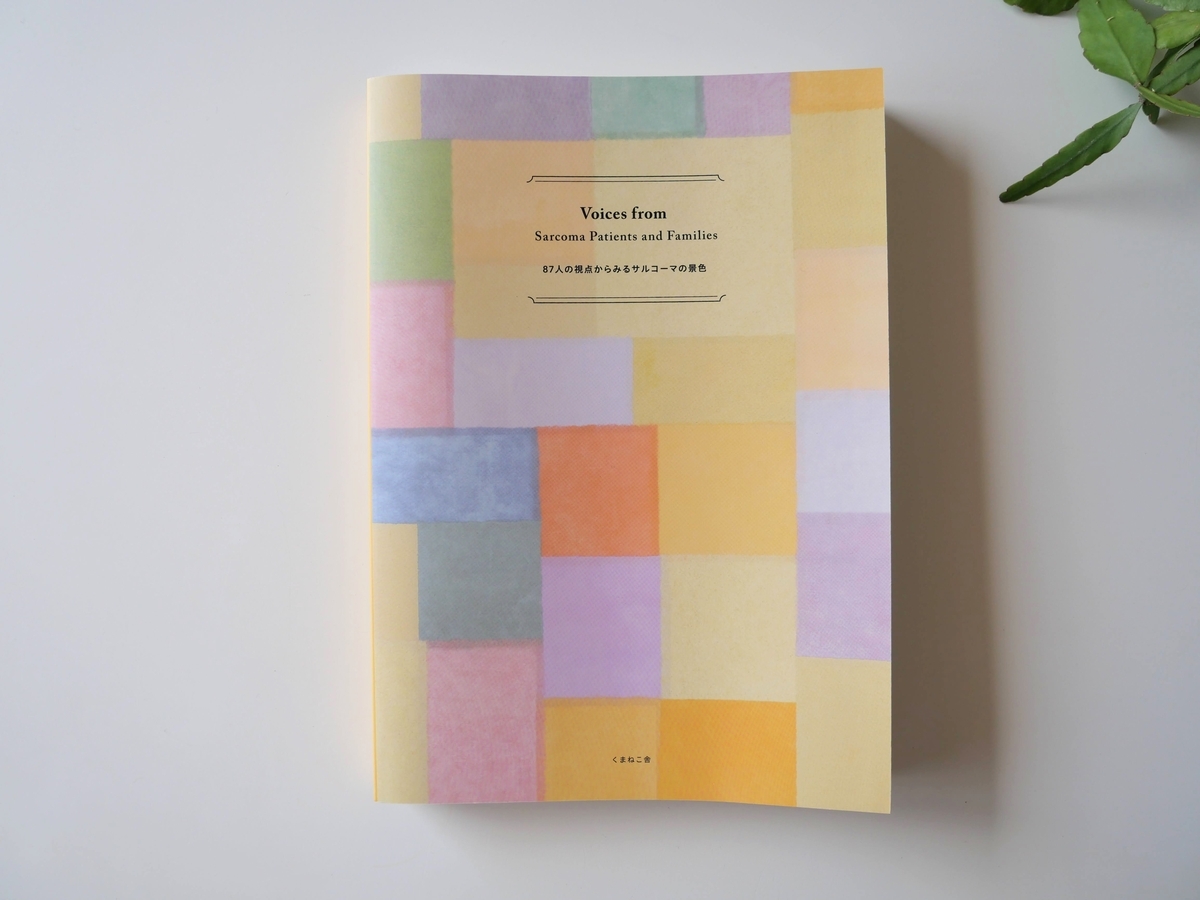
Voices from Sarcoma Patients and Families: Sarcoma Landscapes from 87 Perspectives
A collection of individual experiences, challenges, and hopes from people affected by sarcoma in Japan
What's Inside the Book?
About the Book
This 280-page book was independently edited and produced by Yukie Yoshizaki, with contributions from 87 sarcoma patients and family members in Japan. I created it to share their experiences and perspectives with healthcare professionals and researchers, and to encourage ongoing dialogue about how sarcoma care can be improved. The book explores not only the difficulties and unmet needs people experience, but also positive experiences, meaningful support, and what they appreciate in their relationships with healthcare professionals.
Who Contributed?
87 contributors
71 sarcoma patients
16 family members, including 7 bereaved family members
Contributors were invited through social media, patient communities, and personal outreach, including Japan Sarcoma Patients Network “TANPOPO” and an online sarcoma community. They represent a wide range of ages, life circumstances, and treatment experiences. More than 20 sarcoma types are represented, including osteosarcoma, chondrosarcoma, liposarcoma, leiomyosarcoma, undifferentiated pleomorphic sarcoma (UPS), myxofibrosarcoma, synovial sarcoma, epithelioid sarcoma, malignant peripheral nerve sheath tumor (MPNST), angiosarcoma, gastrointestinal stromal tumor (GIST), Ewing sarcoma, and others.
What Topics Does the Book Cover?
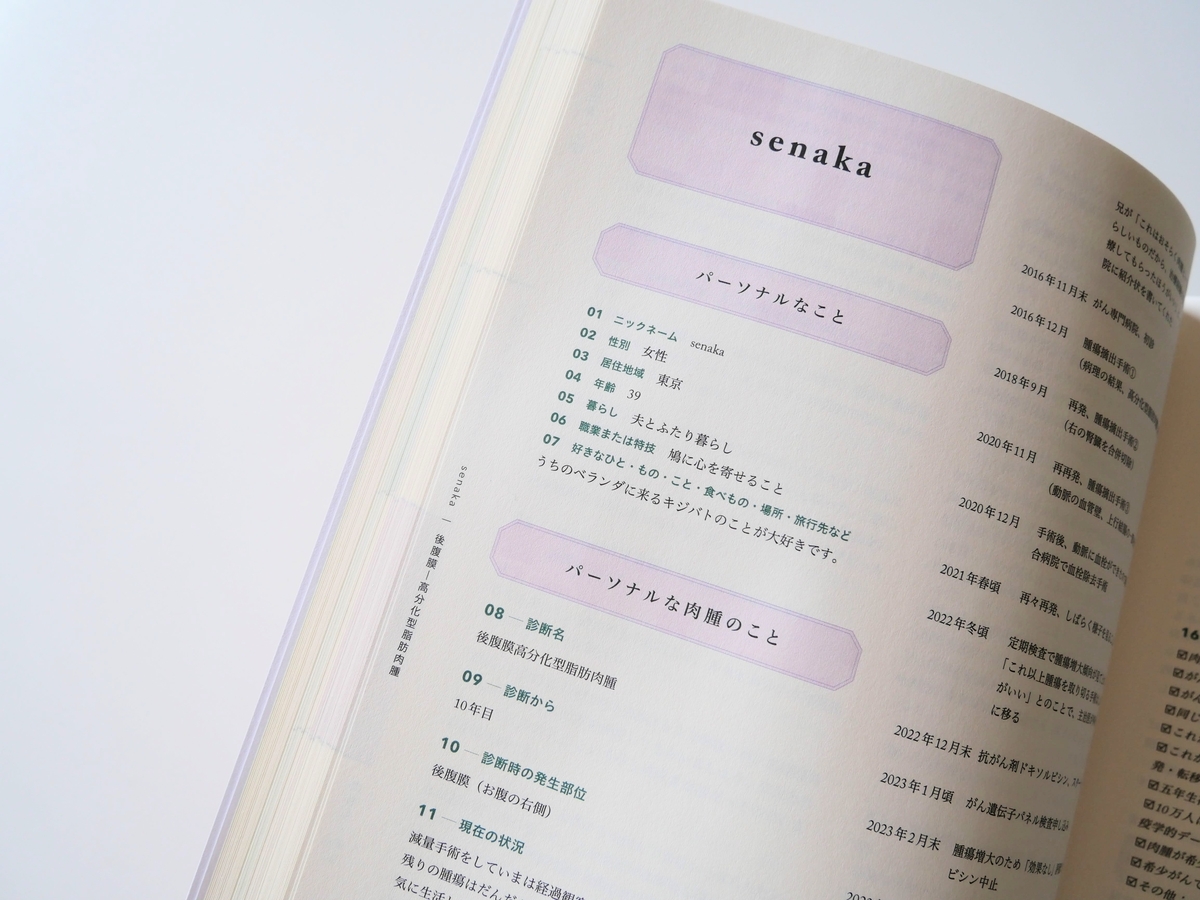
I invited each contributor to answer approximately 60 questions covering different aspects of living with sarcoma. Participants answered only the questions relevant to their experiences.
Diagnosis & Information
Receiving a diagnosis, finding reliable information, understanding medical explanations, and seeking second opinions.
Treatment & Medical Care
Surgery, chemotherapy, radiation therapy, genomic medicine, fertility, rehabilitation, palliative care, and quality-of-life-focused treatment.
Daily Life & Emotional Well-being
Daily life during treatment, financial concerns, medications, appearance care, emotional support, and understanding from others.
Healthcare Systems & Access
Regional differences in care, coordination between hospitals, telemedicine, access to support services, and communication with healthcare professionals.
Research, Community & Future Hopes
Clinical trials, drug lag and drug loss, new treatment development, patient communities, and hopes for the future.
How & Why I Created This Book
Listening to Both Challenges and Positive Experiences
One important feature of this project is that I asked contributors about both the difficulties they experienced and the things healthcare professionals had done that they appreciated.
For example, I asked questions such as:
"What difficulties or concerns would you like healthcare professionals to know about?"
"What have healthcare professionals done that made you feel supported or grateful?"
Some contributors shared both challenges and positive experiences, while others shared only one or the other, depending on their own experiences. I wanted to make room not only for unmet needs and concerns, but also for moments when people felt heard, understood, reassured, or supported.
Understanding Each Person in Context
Each contributor's section begins with background information, such as their age, living situation, region of residence, sarcoma subtype, time since diagnosis, and treatment history. Their responses to the questions follow. I chose this approach because I believe that a person's experiences and perspectives cannot be fully understood without considering the circumstances of their life and treatment journey.
Two people may face similar medical challenges, yet experience them very differently depending on their personal situations, relationships, and previous experiences.
Rather than combining their responses into statistical summaries, I chose to present each person's voice individually, hoping to preserve the diversity and complexity of their experiences.
Not a List of Recommendations, but an Invitation to Listen
The book is not intended to provide a single conclusion or represent the views of all people affected by sarcoma. Nor was it created as a set of formal recommendations or demands directed at healthcare professionals. I recognize that analyzing and summarizing patient experiences can also be valuable. However, with this book, I wanted to begin by sharing individual voices in their own contexts, rather than reducing them to common themes or overall findings. I hope that encountering these personal experiences may encourage readers to look beyond diagnoses and treatments, and consider each person's life, values, relationships, and circumstances. I believe this kind of understanding can contribute to more person-centered and patient-centered care.
Why I Created This Book
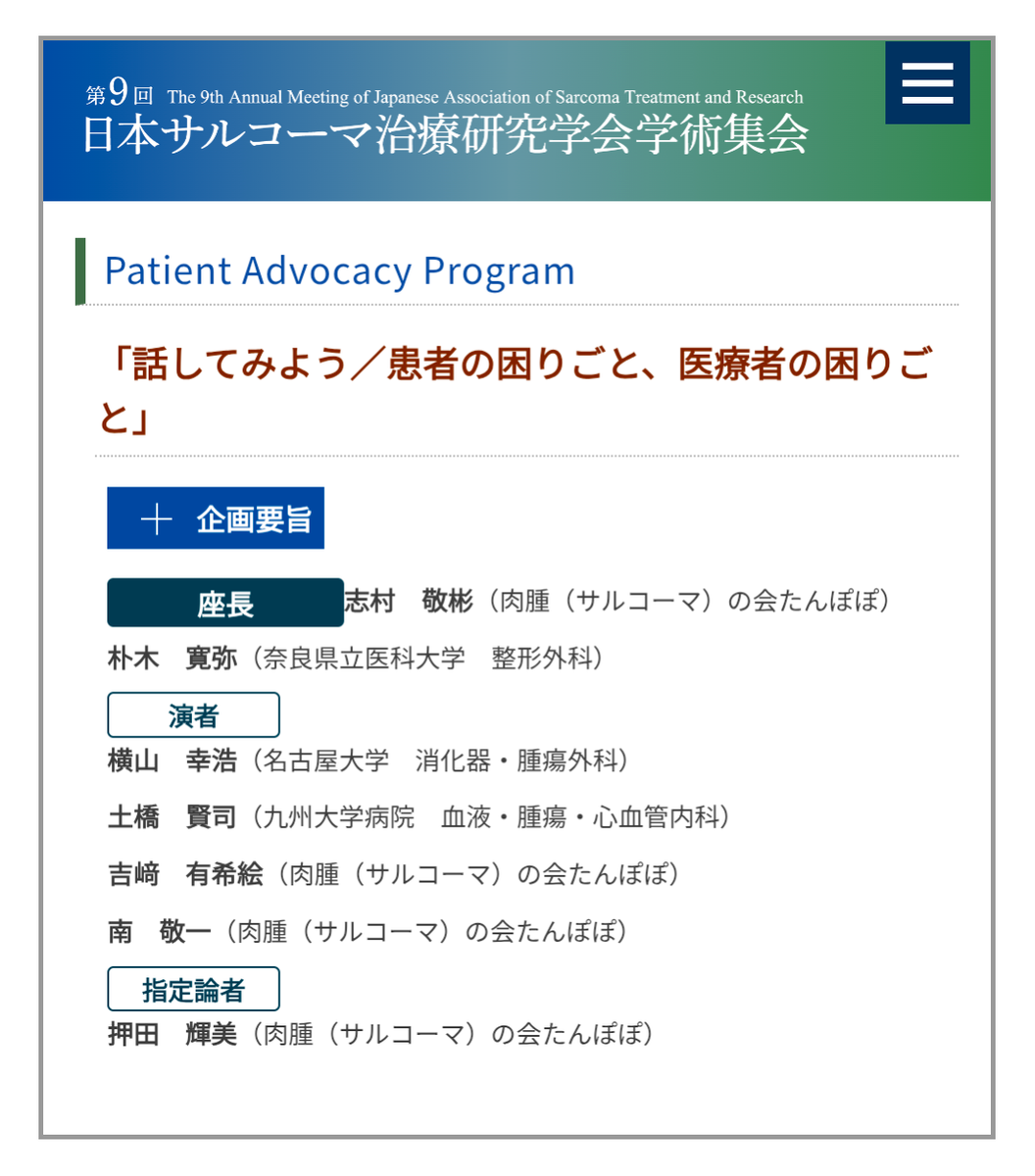
This project began in connection with a Patient Advocacy Program at the 9th Annual Meeting of the Japanese Association of Sarcoma Treatment and Research (JSTAR), which brought patients and healthcare professionals together to discuss the challenges they face. I wanted to create an opportunity for healthcare professionals to encounter the perspectives of patients and families in greater depth.
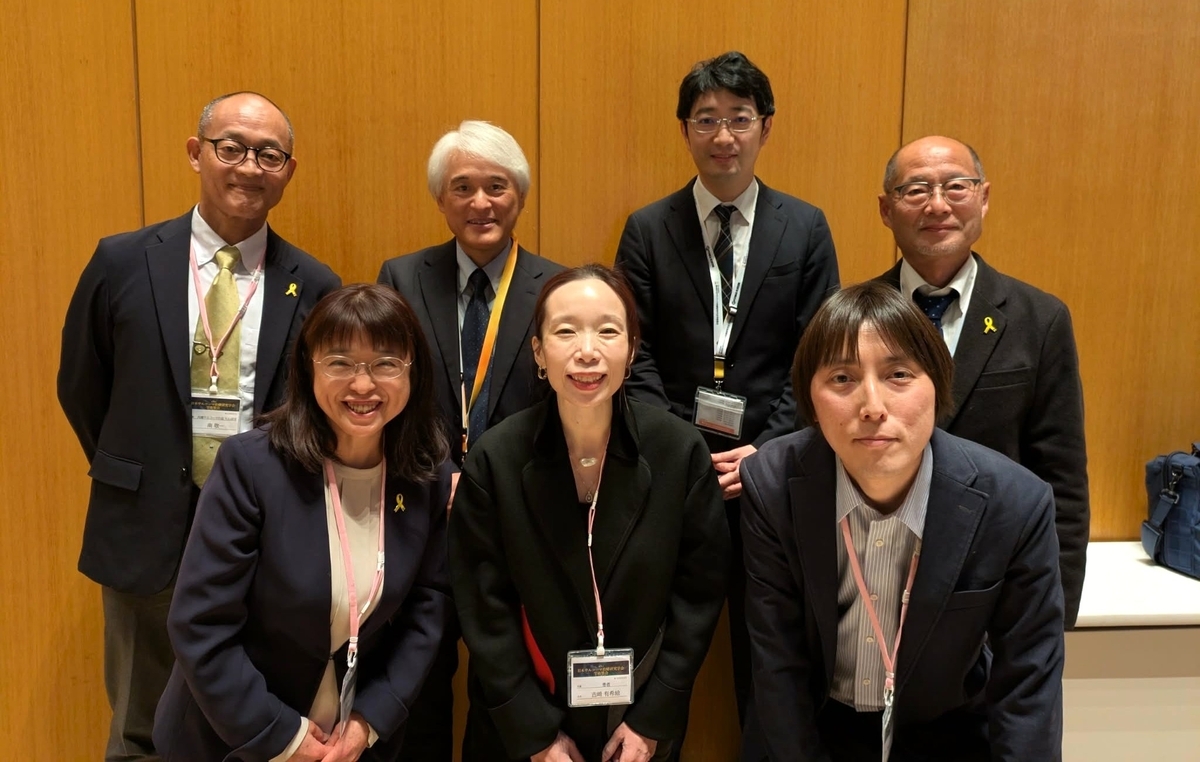
With the speakers and facilitators of the Patient Advocacy Program at the 9th JSTAR Annual Meeting (March 2026). I originally created Voices from Sarcoma Patients and Families to share at this event, and have continued distributing it since then.
From left to right: Keiichi Minami (TANPOPO), Terumi Oshida (Founder and President of TANPOPO), Dr. Yukihiro Yokoyama (Nagoya University), Yukie Yoshizaki (me), Dr. Kenji Tsuchihashi (Kyushu University), Nobuhiro Shimura (TANPOPO), and Dr. Kanya Honoki (Nara Medical University).
With Dr. Akira Kawai, Founder and President of JSTAR, at the 2nd Sarcoma Symposium (October 2026), co-organized by JSTAR and TANPOPO. Since founding JSTAR in 2017, Dr. Kawai has been bringing patients and healthcare professionals together, creating spaces where they can listen to one another, learn from each other, and move forward together toward better sarcoma care.
My Hope
I hope this book can serve as one starting point for continued dialogue between patients, families, healthcare professionals, and researchers. By listening to individual voices—including challenges, positive experiences, and hopes for the future—I hope to encourage mutual understanding and contribute, in a small but meaningful way, to positive changes in sarcoma care.
*The book is written entirely in Japanese. An online version is currently being prepared.
I’m a person living with sarcoma (retroperitoneal liposarcoma / WDLPS + DDLPS). Since my diagnosis in 2016, I have undergone five surgeries and chemotherapy, and participated in a clinical trial. My sarcoma is currently growing quite rapidly, and although the future feels uncertain, I am trying to appreciate each day and everything life brings my way.
Between 2022 and 2026, I independently published three books related to sarcoma. Through publishing and sharing these books with a wider audience, I hope to raise awareness of sarcoma, a rare cancer that remains relatively little known, and to contribute to creatinga world where people affected by sarcomacan live better—and, ultimately, live longer.
Sarcoma Book: The Story of 53 People and Sarcoma (2022) and Pinoko Book: The Story of Pinoko and Me (2022). We donated 100% of the sales revenue from both books to support sarcoma research and treatment development in Japan throughJSTAR and the FUTURE PROJECT.
Voices from Sarcoma Patients and Families: Sarcoma Landscapes from 87 Perspectives (2026)
I asked each participant around 60 questions covering a wide range of topics, including treatment journeys, access to information, clinical trials, challenges they faced, and their hopes for sarcoma care. The book has been shared with healthcare professionals with the aim of bringing patient and family voices more directly into conversations about the future of sarcoma care. Rather than summarizing their responses into statistics, I chose to present each person's voice individually, hoping to preserve the diversity and complexity of their experiences.
The book is 280 pages long and is written entirely in Japanese. We are currently preparing an online version.
Through my publishing work, I hope to create ways for the voices and lived experiences of patients and families to reach healthcare professionals, researchers, and others involved in sarcoma care—and to contribute, in a small but meaningful way, to improving the future of sarcoma care.
I am also a member of TANPOPO, a Japanese sarcoma patient organization, and have spoken at patient advocacy programs held during sarcoma conferences, as well as at events organized by pharmaceutical companies.
In recent years, I have become particularly interested in Patient and Public Involvement (PPI) in Japan and have participated in PPI discussions and initiatives.
Future Hopes
I am curious to learn how people affected by sarcoma live with the disease in different parts of the world—what challenges they face, what gives them hope, and how they navigate uncertainty, fear, and loneliness.
I would also love to learn about patient advocacy and patient involvement in research and healthcare in different countries.
Above all, I hope to build meaningful connections and friendships, share our experiences, and explore what we might be able to achieve together.
One of my dreams is to create a collaborative publishing project that brings together voices from across the international sarcoma community.
Thank you for taking the time to read! If you'd like to get in touch, please feel free to email me! Contact: yoshizakiyukie (a) gmail.com (Please replace (a) with @.)
*Due to my treatment schedule, it may take me some time to reply. Thank you for your understanding.
この考え方は、Patient Advocacy(患者アドボカシー・患者の権利擁護活動)、PPI(Patient Public Involvement/患者・市民参画)とも密接な関りがあり、アメリカを始め、ヨーロッパの医療の考え方とも結びつき、近年では日本でも注目されるようになってきました。日本語でも「医療」「ナラティブ」で検索するとさまざまな解説ページが見つかるので、ご興味ある方はぜひ検索してみてください。(「ナラティブ」の定義は、研究者や実践者によって少しずつ定義が異なる場合があるようです)
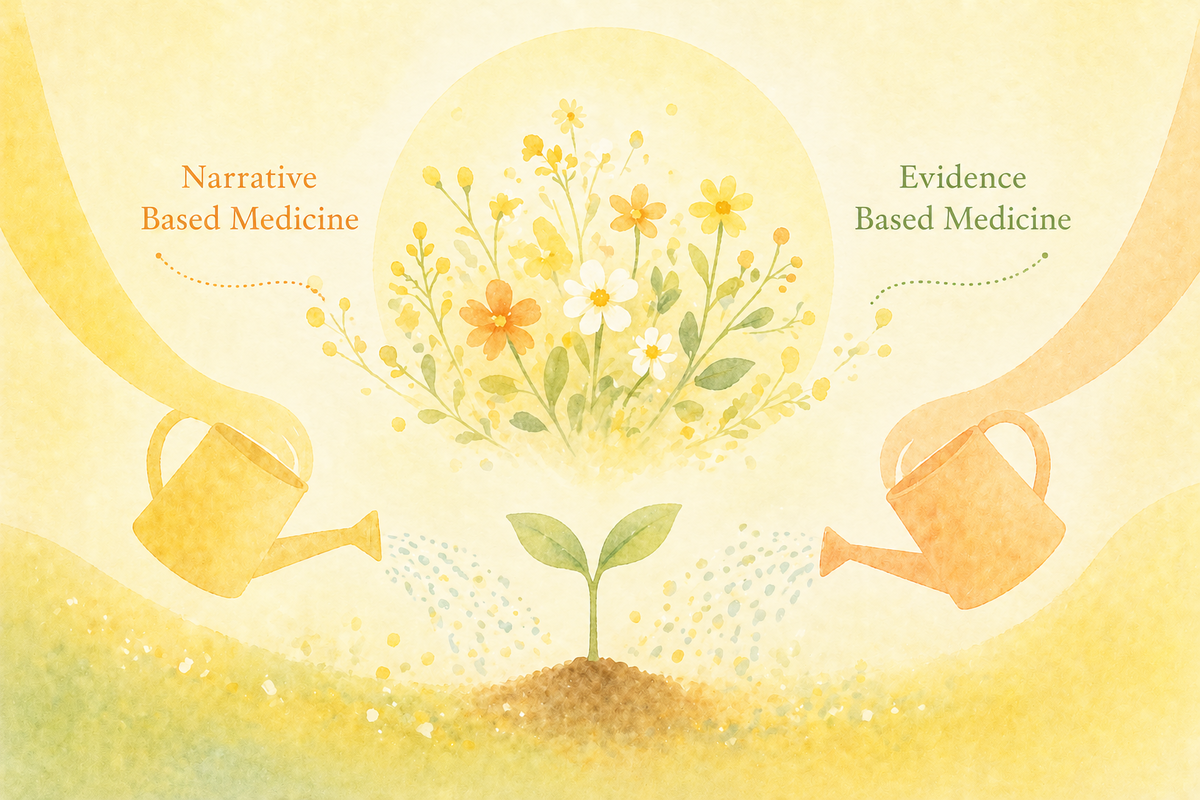
ナラティブの重要性について考えるためにこの文章を書いていますが、医療においてはエビデンス(科学的根拠)が大切であり、Evidence Based Medicine(エビデンスに基づいた医療)が基本となっていることは理解しています。ただ、Narrative (Based) MedicineとEvidence Based Medicineは対立するものではなく、それぞれ異なる側面から患者さんを理解し、支えるものだと信じています。Evidence Based Medicine(エビデンスに基づいた医療)と、Narrative (Based) Medicine(ナラティブに基づいた医療)をどのように結び付け、個々の患者さんを中心としたケア(Person-Centered Care)をつくっていくか。理想的なバランスはどのように見つけるのか。大変むずかしい課題ではありますが、皆さまのお知恵を借りながら一緒に考えていけると幸いです。
前半の講演が終了したあと、後半はディスカッションでした。指定論者として押田輝美さん(「肉腫の会たんぽぽ」会長)が加わり、オーディエンス席の先生方や患者さんたちからの意見を伺いながら、PPI(Patient Public Involvement / 研究への患者市民参画)のあり方などについてディスカッションが進み、とても有意義で刺激的な経験でした。